
The Art of the Bustle: A Guide to Wedding Dress Styles and Transitions
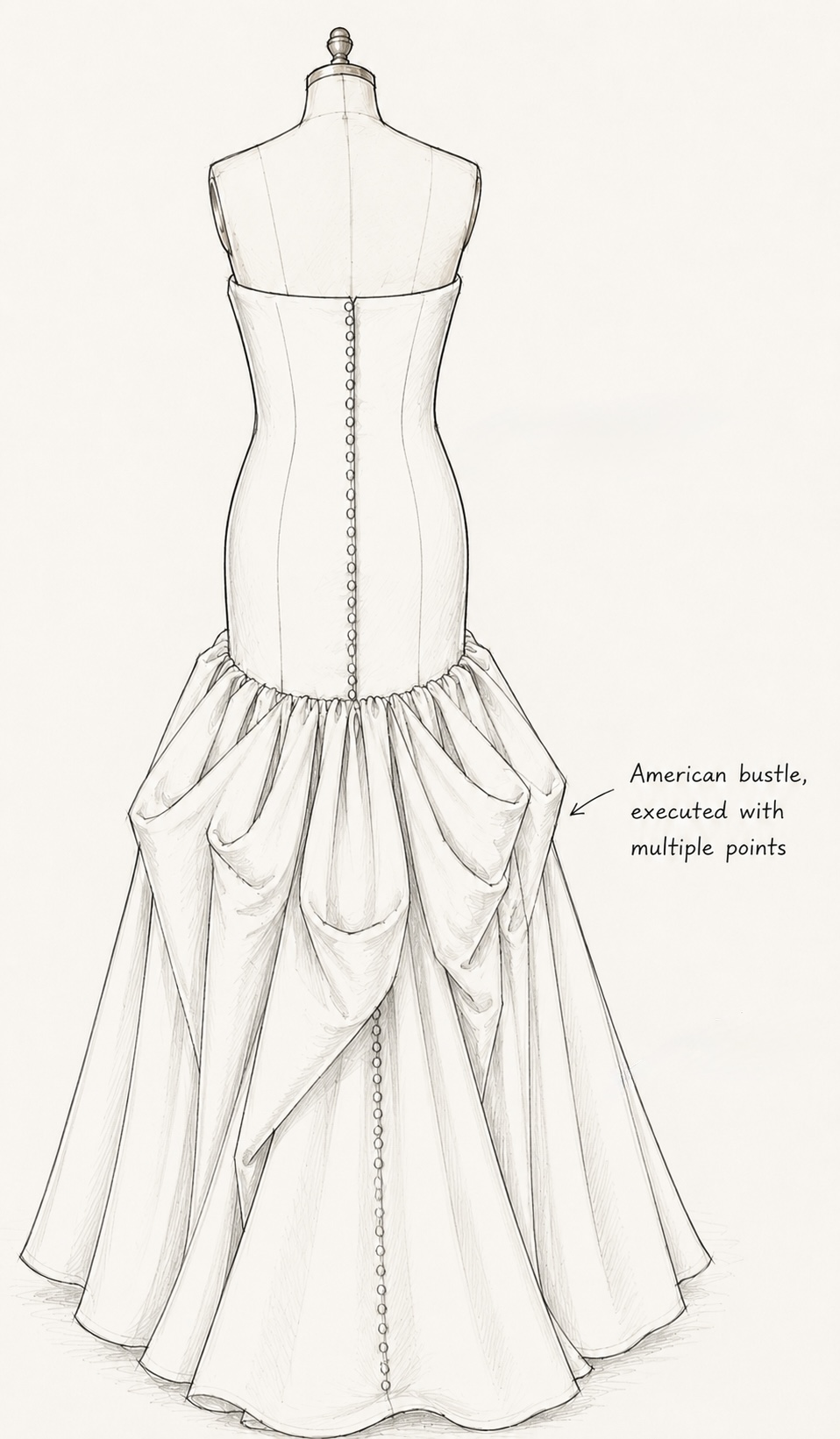
Your wedding gown’s silhouette shouldn’t end at the altar. It should evolve. Mastering the bustle wedding dress transition is an act of architectural grace that preserves the beauty of your train while liberating your movement for the celebration ahead. It’s a secondary design phase where artisanal craftsmanship meets choreography. Every fold should feel intentional. Every lift must be secure.
We understand the quiet anxiety that often accompanies a grand, sweeping train. You’ve curated a look of timeless luxury, and the fear of a broken loop or a clumsy stumble during your first dance can linger in the back of your mind. This guide provides the refined confidence you need to manage your gown’s transition with effortless ease. We’ll demystify the technical artistry behind American and French styles, ensuring your chosen bustle complements the unique sculpture of your gown. From tailoring secrets for bespoke designs to clear instructions for your maid of honor, you’ll gain total mastery over your evening’s silhouette. Precision is the ultimate luxury. Your dance floor debut deserves nothing less than perfection.
Key Takeaways
- Understand why the bustle is a custom architectural necessity, tailored specifically to your gown’s unique structure and train length.
- Identify the aesthetic distinctions between American and French styles to ensure your reception silhouette remains as intentional as your ceremony look.
- Learn to select a bustle wedding dress configuration that provides the necessary reinforcement for heavy fabrics like Mikado and silk.
- Equip your bridal party with technical strategies, including specialized fitting attendance, for a seamless transition from the aisle to the dance floor.
- Discover the value of designer-led alterations in preserving the artistic integrity and movement of bespoke luxury gowns.
What is a Wedding Dress Bustle? Defining the Reception Transition
A bustle is more than a simple alteration. It’s a sophisticated system of hidden fasteners, including delicate buttons, reinforced loops, and silk ribbons, designed to lift the train of your gown. This transition allows you to move with poise after the ceremony. While the aisle demands drama and length, the reception requires freedom. The bustle provides that liberty without sacrificing the gown’s aesthetic integrity.
You might wonder why a designer doesn’t include a bustle in the initial construction. The reason is rooted in the precision of high-end tailoring. A bustle wedding dress configuration must be meticulously measured against your specific height, the height of your chosen footwear, and the exact point where the fabric should break. It’s a bespoke element that can only be finalized once the gown is on your frame. This process creates a “second look” effect, transforming a sweeping, ceremonial silhouette into a tailored evening look that feels intentional rather than tucked away. For brides who wish to explore diverse cultural styles for their reception or other festivities, they can check out Saree Ghor Charlotte for a curated selection of authentic South Asian apparel.
The Functional Necessity of the Bustle
Beyond the visual transformation, the bustle serves as a guardian of your investment. A train left to drag across a reception floor is vulnerable to fabric tears, wine stains, and the inevitable “street sweep” effect. Securing the train also ensures safety; it eliminates trip hazards for you and your guests during the first dance. For gowns crafted from heavy materials like Mikado or multi-layered tulle, a well-engineered bustle also redistributes weight. It eases the pull on your waistline, allowing you to celebrate in comfort until the final toast.
- Investment Protection: Keeps delicate hems away from high-traffic floors.
- Safety: Removes the risk of stepping on fabric during choreography.
- Weight Distribution: Balances the gown’s architecture for all-day wear.
When to Start the Bustle Conversation
The ideal time to define your bustle is during your first alterations appointment. This is when the hem is pinned and the gown’s movement is analyzed. You should identify your train length early, whether it’s a modest Sweep, a classic Chapel, or a dramatic Cathedral, as this determines the number of attachment points required. At Guillermo Pharis Bridal, we treat this as a collaborative design session. You’ll also need to schedule a “bustle lesson” for your maid of honor or a trusted friend. They’ll be the ones executing this architectural shift on the day of the wedding, so their understanding of the buttons and loops is paramount. Precision in the fitting room ensures a seamless transition at the venue.
The Most Popular Wedding Dress Bustle Styles for 2026
The selection of a bustle wedding dress style is a pivotal moment in the custom tailoring process. It is the point where the gown’s ceremonial grandeur meets the pragmatic needs of the dance floor. For 2026, the trends favor architectural clarity and hidden engineering. Whether you desire a romantic exterior cascade or a clean, vanishing hemline, the method must be as refined as the fabric itself. Each style offers a distinct personality, allowing your gown to evolve as the evening progresses.
- The American (Over) Bustle: This style lifts the train and secures it to the exterior of the skirt, creating a romantic, tiered effect. It is often the most intuitive for the bridal party to execute.
- The French (Under) Bustle: A Victorian-inspired technique where the fabric is tucked inward. This creates a sophisticated, rounded hemline that feels seamless and artisanal.
- The Austrian Bustle: Utilizing a unique drawstring method, this style gathers the fabric centrally. It is a visionary choice for gowns with complex lace or heavy embellishments.
- The Ballroom Bustle: The ultimate “vanishing” act. Numerous attachment points are used to lift the train so it appears to be a floor-length gown with no train at all.
The American vs. French Bustle Debate
The choice between these two classics often depends on your gown’s silhouette. The American bustle is a natural companion for a sophisticated look that drapes the train over the center back, excellent option for fit and flare light to medium weight fabrics as silky, lace, crepe dresses, voluminous ball gowns also can look beautiful with an American bustle. It adds a sense of cascading drama to the back of the skirt. Conversely, the French bustle is the gold standard for Mermaid or Trumpet styles. It preserves the body-conscious lines of the dress while adding a sophisticated fold at the back. While the American style is often easier for a bridesmaid to secure, the French version offers a clean look and more couture finish.
Sophisticated Variations: Austrian and Wristlet
Modern variations offer even more specialized solutions for the discerning bride. The Austrian bustle is an architectural marvel, using a central drawstring to create a gathered, sculptural look. It’s particularly effective for the intricate lace patterns found in our 2026 collection. For those with dramatic Cathedral trains, the Royal bustle utilizes multiple attachment points to distribute weight evenly. If you prefer a minimalist touch, the Wristlet provides a simple loop that allows you to carry the train on your arm with grace. To ensure your gown transitions with this level of precision, consider a private design consultation to explore which architectural style best suits your frame.
Matching the Bustle to Your Gown’s Fabric and Silhouette
The soul of a bustle wedding dress lies in the delicate balance between the fabric’s weight and the silhouette’s geometry. It is a technical feat that demands an intimate understanding of textile behavior. While a sweeping train offers a moment of pure drama, its transition to a reception-ready look must respect the inherent nature of the material. A gown’s architecture is not static. It must evolve with grace.
Heavy, high-luster fabrics like Mikado and heavy satin present unique challenges. These materials are celebrated for their structured, sculptural quality, yet their weight requires reinforced attachment points to prevent tearing. At our Denver atelier, we ensure that every button and loop is anchored deep within the gown’s internal framework. Conversely, delicate textures like silk chiffon and fine French tulle require a lighter touch. Fasteners must be smooth to avoid snagging the gossamer threads. We often hide these points within the natural folds of the skirt, ensuring the transition is invisible to the eye.
For a custom-made Guillermo Pharis gown, the bustle is treated as a secondary design phase rather than a correction. It is an extension of the original sketch. We look at beading and lace patterns as a map. They dictate exactly where bustle points should be hidden, allowing the artistry of the embroidery to remain uninterrupted even when the train is lifted. Precision is our standard.
Bustling by Silhouette: From Ball Gown to Sheath
Voluminous ball gowns provide a generous canvas, allowing us to hide multiple bustle points within deep pleats. This maintains the grand scale of the skirt while providing security. Mermaid and Trumpet silhouettes require more precision; the bustle must lift the flared tail without distorting the body-conscious lines of the hips. In an A-line gown, the goal is to preserve the clean, diagonal flow of the skirt. We lift the train in a way that mimics the natural “A” shape, ensuring the evening silhouette remains as flattering as the ceremonial one.
Fabric-Specific Tailoring Tips
Mikado fabric requires the structural support of a French bustle (under bustle) to maintain its crisp, architectural shape while concealing the weight of the train. When working with intricate lace overlays, we utilize clear buttons or hand-sewn thread loops that disappear into the embroidery. This level of detail is essential for preserving the artistic vision of the designer. Additionally, internal layers like crinoline are often used as a foundation. They provide a hidden shelf that supports the bustled fabric, preventing the train from sagging during the celebration.
How to Bustle Your Wedding Dress: A Guide for the Bridal Party
The transition from the ceremony aisle to the reception dance floor is a choreographed moment of ritual. It requires a dedicated guardian of the silhouette. For most brides, this role falls to the Maid of Honor. Mastering the bustle wedding dress transition ensures that the gown’s architectural beauty remains intact long after the vows are exchanged. It is an act of service that preserves the artistic vision of the day.
Preparation begins long before the wedding day. Your Maid of Honor can attend the final fitting at our atelier and learn everything about it, in most cases, brides will select the American bustle, which is practical and easy to perform. For the under or French bustle, is a masterclass in your gown’s specific engineering. We often employ a technique with threads loops to match their corresponding buttons or ribbons, everything fully invisible under the lining. Precision is the ultimate luxury. It allows for a calm, composed transition.
Timing is as critical as technique. We recommend bustling the gown immediately following formal portraits and prior to the grand entrance. This ensures you enter the celebration with a liberated stride. Always keep an emergency kit on hand. A small pouch containing heavy-duty safety pins and clear fishing line can be a sanctuary in the rare event of a snapped fastener. To ensure your bridal party is fully prepared, schedule a final fitting session where we can demonstrate these techniques in person.
Step-by-Step Execution
To achieve a balanced look, begin by locating the center point of the train. This is your anchor. Match it to the corresponding waist fastener first. From there, work your way outward toward the side seams. This method ensures even weight distribution across the gown’s framework. Finally, gently fluff the layers of silk or tulle. The fabric should fall naturally and gracefully, mimicking the original design of the skirt without appearing forced or heavy.
Troubleshooting During the Reception
If a bustle loop snaps during a particularly spirited dance, do not panic. Use a safety pin from the inside of the gown to secure the fabric to the lining. This keeps the repair invisible. If the fabric begins to sag over time, it often means the weight has shifted. Simply unhook and re-secure the points, starting again from the center. When sitting, remember to lift the bustled fabric slightly before you descend. This prevents unnecessary tension on the delicate buttons and loops, keeping your bustle wedding dress secure until the final toast.
The Bespoke Journey at Our Denver Studio
Every bride carries herself with a unique rhythm. The way you move, the height of your heel, and your personal stride all dictate where the bustle points should sit to maintain the gown’s equilibrium. This personalized assessment is the heart of the custom made wedding dresses denver experience at our studio. We collaborate with you to define a look that reflects your movement style. The final walk-through in the studio is a celebratory moment of clarity. You’ll move, turn, and sit, ensuring the architecture holds with effortless grace before you leave our care.
Booking Your Appointment After Finding Your Dress
For brides planning their 2026-2027 nuptials, securing your place on our tailoring calendar is a priority. We recommend beginning the conversation shortly after your wedding dress selection at our showroom, to ensure ample time for meticulous hand-work. When preparing for your fitting visit, bring your wedding shoes and the exact undergarments you plan to wear; these nuances directly impact the hemline and the bustle’s tension. We invite you to book a boutique appointment to receive expert guidance on your gown’s transition. Trust the expertise of the artisan. A perfect bustle wedding dress should feel like a natural extension of your personality, allowing you to own the room with refined confidence. Our service is exclusive for our dresses.
Elevate Your Reception Silhouette
Your wedding day is a narrative of two distinct chapters. The transition between them should be seamless and intentional. By selecting a style that respects your gown’s architecture, you ensure your aesthetic remains uncompromised from the first toast to the final dance. A precisely engineered bustle wedding dress preserves the artistic integrity of your train while granting you the freedom to move with refined confidence. It is the final, essential element of your bespoke journey.
At Guillermo Pharis Bridal, we offer all bustle styles to our brides, after finding their dream dress, with our in-house artisan alterations, we treat every request as a design opportunity. Our designer-led studio specializes in the complex engineering required for 2027 luxury bridal collections and custom creations. We don’t just lift fabric; we sculpt movement. Trust your gown to artisans who understand the intersection of high-fashion allure and technical precision. We’re here to guide you through every fold and fastener with the care your investment deserves.
Book Your Bridal Appointment in Denver to find your dream dress and ensure your gown’s transition is as breathtaking as your walk down the aisle. We look forward to perfecting your silhouette for every moment of your celebration.
Frequently Asked Questions
When should I decide on my bustle style?
You should finalize your bustle design during your first alterations appointment. This is the moment when your hem is pinned and the gown’s movement is analyzed in relation to your wedding shoes. It’s essential to have your footwear and undergarments present; these elements dictate the exact height and tension needed for a flawless transition. Decisions made during this window ensure the engineering is perfectly tailored to your frame.
How much do wedding dress bustle alterations typically cost?
The investment for bustle alterations varies based on the complexity of the gown’s architecture and the number of attachment points required. Intricate lace overlays or heavy Mikado fabrics often demand more sophisticated engineering than a simple silk sheath. Industry professionals suggest that the more dramatic the train, the more specialized the labor involved in creating a secure, invisible lift. Your tailor can provide a precise estimate after evaluating the fabric’s weight and volume.
Can any wedding dress be bustled?
Almost any gown with a train can be bustled to facilitate easier movement. Whether you have a modest sweep or a grand cathedral length, an expert tailor can design a system of loops and buttons to secure the excess fabric. The only gowns that don’t require this architectural shift are floor-length or tea-length dresses where the hem remains uniform around the entire circumference. Every train deserves a tailored solution to ensure the bride’s comfort.
What is the easiest bustle for a bridesmaid to do?
The American bustle is widely considered the most intuitive for a bridal party to execute. Because the fasteners are located on the exterior of the skirt, the loops are easily matched to their corresponding buttons. While a bustle wedding dress transition always requires practice, this style’s visible attachment points make it a preferred choice for a seamless, stress-free shift before the grand entrance. It offers a classic look with minimal technical difficulty.
Will a bustle change the look of my dress?
A bustle will intentionally transform your silhouette, creating a sophisticated “second look” for your evening celebration. While the ceremony emphasizes length and drama, the bustled gown offers a more tailored, sculptural aesthetic. An artisanal approach ensures that this new shape complements the original design. This turns a functional necessity into a deliberate fashion statement that feels both fresh and elegant for the dance floor.
How many points does a bustle need for a cathedral train?
A cathedral train typically requires between three and seven attachment points to distribute the fabric’s weight evenly. For exceptionally heavy materials or wider trains, a tailor might recommend even more to prevent sagging and ensure structural security. This multi-point system preserves the gown’s hemline and protects the delicate fasteners from snapping during movement. Precision in point placement is key to maintaining the dress’s balance.
What happens if my bustle breaks during the wedding?
If a fastener fails, a well-prepared emergency kit is your best sanctuary. Use heavy-duty safety pins to secure the train to the gown’s internal lining; this keeps the repair hidden from view. This quick fix allows you to continue enjoying the celebration without the risk of tripping. A designer-led fitting significantly reduces the likelihood of such a mishap, as the fasteners are anchored into the gown’s structural framework.
Is a bustle necessary for a floor-length dress without a train?
A bustle wedding dress configuration is unnecessary for gowns that are floor-length without any trailing fabric. Since the hem is already even with the floor, there is no excess material to lift or secure. However, if your gown has even a minimal sweep train, you may still want a single-point bustle to keep the fabric pristine. This ensures your movement remains liberated and your hem stays clean throughout the night.